My work as an artist operates at the intersection of lived experience, co-authorship, and creative health. I am guided by a principle I refer to as situational co-nurturing: a relational, situated, and embodied approach to art-making that holds space for collective vulnerability, joy, grief, and resistance. I practice what I call applied live art — a socially engaged methodology that integrates visual language, performance, spatial design, and participatory action to forge new cultural ecologies.
For over two decades, I have lived and worked in East London while collaborating across national and international borders in contexts as diverse as Ghana, Colombia, and across the UK. My projects often centre underrepresented voices and intergenerational exchange, exploring themes such as mental health, climate breakdown, housing justice, identity, and diaspora. At the same time, celebration is core to my methodology. I bring together people into moments of collective joy and ritual — through street interventions, processional works, and collaborative live events. I treat storytelling not as content, but as social infrastructure. The narratives we shape together are blueprints for alternate futures — ones that centre care, reciprocity, and shared belonging.
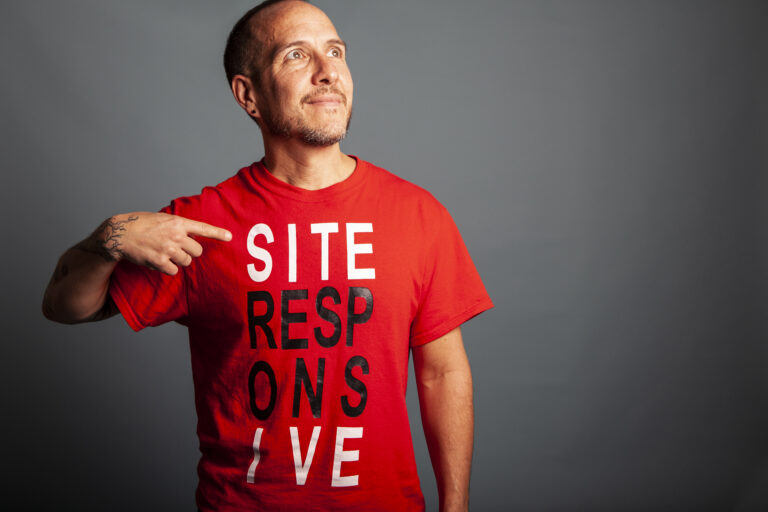
My practice unfolds at the intersection of live art, interactive installation, and social engagement: a terrain in which psychogeography, collaboration, and community co-authorship converge to form experiences of collective creativity and reflection. Drawing on personal histories—from transnational roots and memories of living through political upheaval—to site‑responsive encounters in cities and landscapes, I work to democratise culture through art that is rooted in place, story, and wellbeing. Across a diverse array of projects—from immersive audio walks like Marshes: A Walk for One and The Invisible Skin, to live art performances such as Triangulated City and From the Daughter of a Dictator, and public-painting works like Rachel’s Tomb or Brain Drain—my work operates within a meshwork of voices, terrains, and narratives. Each project becomes a site-responsive collaboration in which meaning is co‑generated between the artist, participants, and environment.
Emerging from the architecture of control, migration, ecological crisis, and systems of confinement, my work seeks to facilitate improvisational public encounters, multi-sensory journeys, and forms of creative resistance that open up inner and outer spaces for reflection. From the political textures of Triangulated City in Beirut, to the intimate solo audio explorations of a walk in Hackney Marshes, each project extends questions of system, identity, memory and place.My process blends research, community dialogue, trial and improvisation: materials, text, performance, sound and visuals become conduits through which collective authorship emerges. I strive to spark encounters where meaning is shared, fragile, contested, and generative—a creative platform where art is not simply made by one, but made with many.
Ultimately, I see live art and social practice as a means of stirring communal connection—of creating spaces where beauty, sorrow, memory, care, and participation converge. My work affirms that art is not separate from life; it is a space through which life is transformed, witnessed, gathered, and collectively made.
The political body is situated within a matrix of crises: mental health fragility, ecological collapse, economic precarity, racialised violence, and the atomisation of community in a post-pandemic reality. These are not isolated issues but deeply entangled; I see this entanglement as the polycrisis, and respond through a methodology I call polycare.
Polycare is a creative and civic practice that acknowledges care as multiple, porous, and co-authored. It recognises that care must be designed with, not for—and that artistic practice can act as both sanctuary and provocation. My live art process invites vulnerability, improvisation, and shared authorship, operating at the edges of performance, ritual, and psychogeographic mapping. I work with bodies, memory, sound, and space to create platforms where participants become collaborators, and artwork emerges from relationship.
My scholarly inquiry maps alongside my creative practice. At the heart of my research lies an engagement with emotional labour, the relationship between aesthetic practice and care, and the role of creativity in mediating presence, place, and grief. Through peer-reviewed publications, lectures, and forums, I explore how art can sustain both individual and collective wellbeing. Collaboration is both methodology and ethos. I co-founded the Social Art Network, co‑convened the UK’s first Social Art Summit, the Social Art Award and produce alliances between higher education, museums, health settings, and grassroots communities. My aim: to shape a legacy infrastructure that sustains dialogical, socially‑engaged art.
They are Director of Applied Live Art Studio where he delivers his larger-scale collaborative projects.
They are a Lead Consultant for organisational development, access and inclusion, policy development and assessment and culture change.